Blog·Kitzy · July 22, 2026
PSM1000 vs. PSM300: which IEM rig should you rent for your tour?
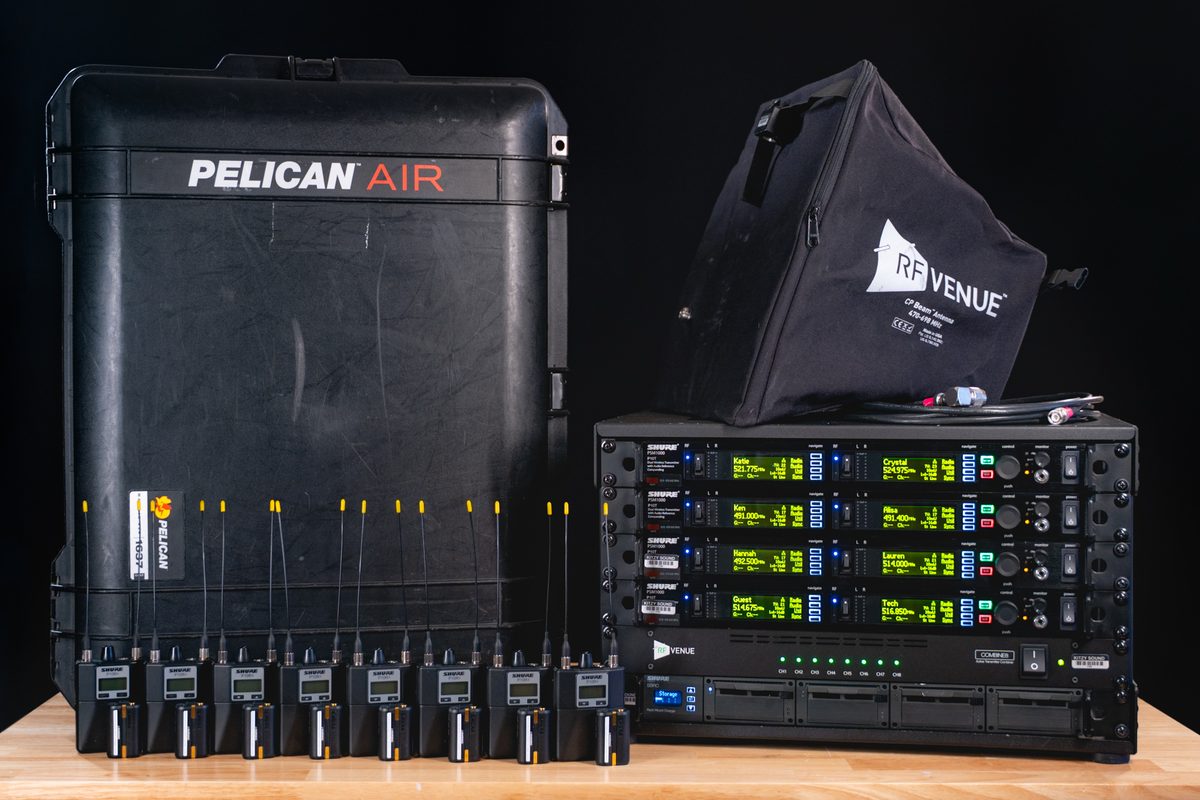
Both of Shure’s PSM systems will get in-ears on your band. The right one for your tour depends on channel count, RF environment, and budget. Here’s how I spec it when a band asks. Both live in our wireless rental inventory, so I have no horse in this race beyond your show working.
The short answer
- PSM300: budget tours, smaller channel counts, forgiving RF environments. Travels as a carry-on.
- PSM1000: the professional touring standard. Dense channel counts, hostile RF, networked control, and features your monitor engineer will actually use.
Now the reasoning.
Where the PSM300 shines
The PSM300 is the workhorse that put in-ears within reach of bands who used to tough it out on wedges. A rack of P3T transmitters with P3RA bodypacks covers a band without flagship spend, and the whole rig is compact enough to fly in the overhead.
Two things I like about it in the real world:
- MixMode gives each musician a personal blend of two channels from their own pack, which is genuinely useful when you don’t have a dedicated monitor engineer.
- Simplicity. Fewer things to configure means fewer things to misconfigure at load-in.
Its limits show up as your show grows. The tuning range is narrower, so in a crowded RF neighborhood (festivals, big-city venues, TV) you have less room to maneuver. And there’s no networked RF management, so coordination is manual.
Where the PSM1000 earns the money
The PSM1000 is what you’ll find on professional tours, and here’s why:
- Dual-channel P10T transmitters put two mixes in a single rack space, so channel counts scale without the rack becoming furniture.
- Wide tuning range gives you the agility to land clean frequencies in dense RF, night after night, city after city.
- Networked RF management means the whole system is visible and coordinated from software, not sticky notes.
- CueMode lets you check any performer’s mix right from the rack. It’s the feature monitor engineers miss most on smaller systems.
- P10R+ diversity packs hold onto signal in conditions that make lesser receivers sputter.
Our PSM1000 rig travels in a single Pelican 1637 Air, with antenna distribution and rechargeable batteries included, because a pro IEM rig that shows up without RF distribution isn’t finished.
How I actually decide
Three questions:
- How many mixes? Past a handful of stereo mixes, the PSM1000’s density and networking stop being luxuries.
- Where are you playing? Club runs in secondary markets are forgiving. Festivals and dense urban RF are not. The worse the neighborhood, the more the 1000’s tuning range matters.
- Who’s mixing monitors? No dedicated monitor engineer? The PSM300’s MixMode can carry more weight than you’d expect. Have one? They’ll want CueMode and Wireless Workbench.
Not sure which side of the line your tour falls on? Get in touch and I’ll spec it with you.